Sebastian Liste on Documentary Photography and the Decisions That Move a Project Into the World
The Work That Starts When the Photograph Is Finished
Sebastian Liste studied sociology and anthropology before turning fully to documentary photography, and that training still shows in his method. Rather than treating an image as an isolated record, he tells stories with his photographs, and maps the communities, relationships, and social structures that give a moment its meaning.
He has worked this way for more than two decades, across the Americas, the Middle East, Africa, Asia, and Europe. His photo stories have been published by National Geographic, TIME, The New York Times, and The New Yorker, and his long-term projects have been supported by major photography institutions. His work has been exhibited from New York to Tokyo.
How Sebastian Liste Approaches Long-Term Projects
The clearest example of how Sebastian Liste works is Amazon, the last frontier, a project he has pursued across the Amazon rainforest for more than a decade. In that time, he has photographed the frontier as it advances: forest cleared for cattle and soy, illegal gold mining pushing into Indigenous territory, rivers carrying mercury into the fish people eat, and the violent land disputes that follow.
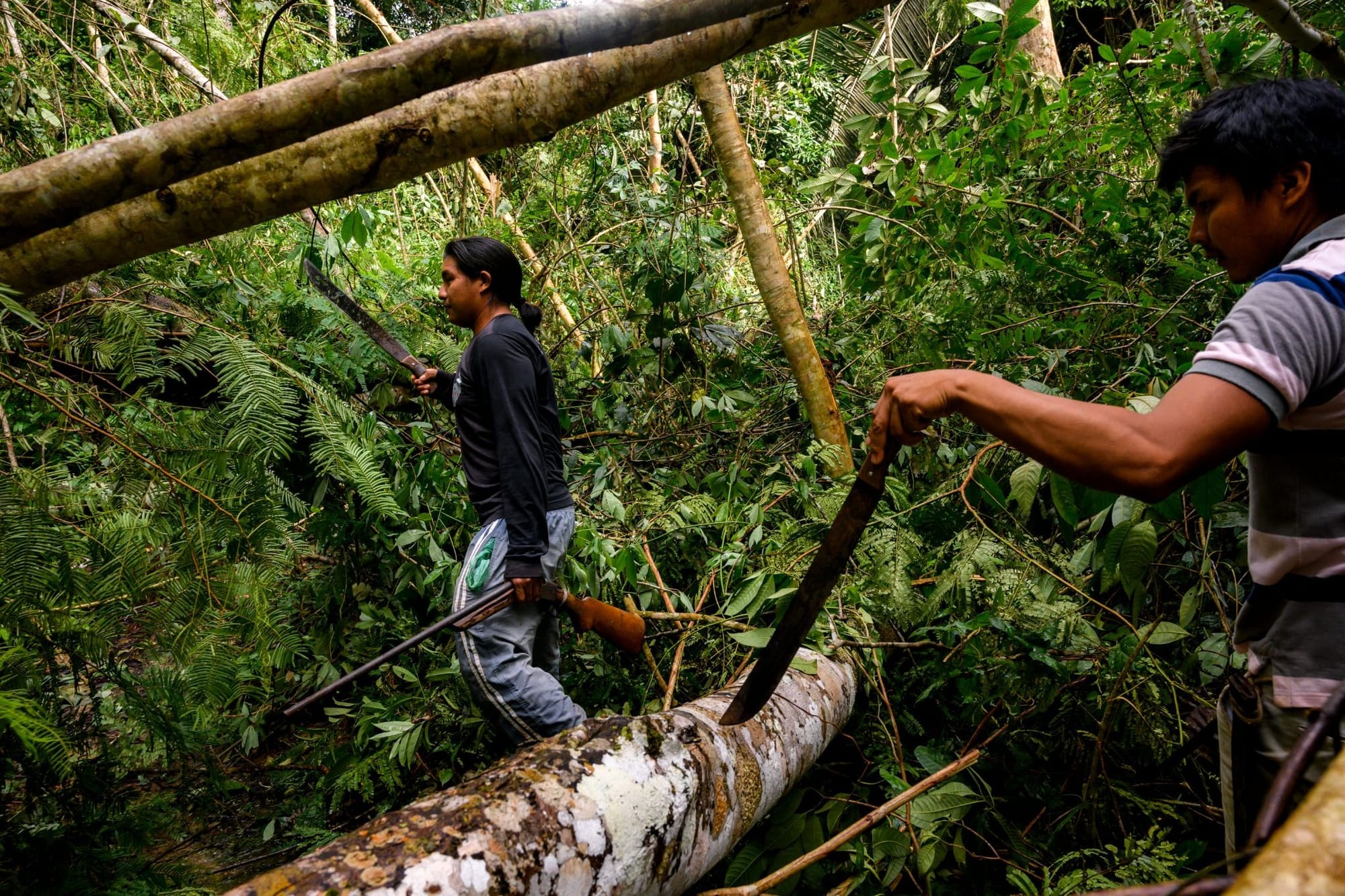
Rondônia, Brazil. Members of the Karipuna tribe cross a felled trunk on an expedition to check the deforestation of their ancestral land inside the reserve. From Amazon, the last frontier by Sebastian Liste / NOOR Images.
Support from the Pulitzer Center, Magnum Foundation, Getty Images, and Alexia Foundation has extended the reach of Sebastian Liste's documentary practice. Long-term fieldwork requires time and access that a single assignment rarely covers, and that support lets a project run long enough to be finished on its own terms.
His assignments have taken him across the world: to Syria, where he photographed for National Geographic the loss of home and the difficult process of reconstruction of a country after a conflict, and across Latin America, where he has examined violence as both a political force and a condition of daily life. The subjects change. His approach does not.
Sebastian Liste Across Publications and Institutions
Sebastian Liste has built a professional record that connects independent projects, editorial assignments, and international photography institutions. He shoots long-form magazine stories, exhibits at museums, galleries, and photo festivals, takes commissions from organizations for their communication work, and develops his own projects over years. His photographs are held in public and private collections around the world.
He has won a World Press Photo award and the Community Awareness Award at Pictures of the Year International. At the photo festival Visa pour l'Image, he won the City of Perpignan Rémi Ochlik Award, and he received a Citation for Excellence from the Overseas Press Club of America. He is also a member of NOOR Images and a Leica Ambassador.
A photograph does not reach anyone on its own. What carries it there is the work that happens after the photograph is taken: the edit that finds the story hidden in hundreds of images, the sequence that makes it hold, the research that gives it weight, the proposal that convinces someone to support it and find the right audience, and knowing who to take it to, which editor, which curator, which institution. That is the part of the job Sebastian Liste has built his career on, and it is how a project reaches people instead of sitting on a hard drive.
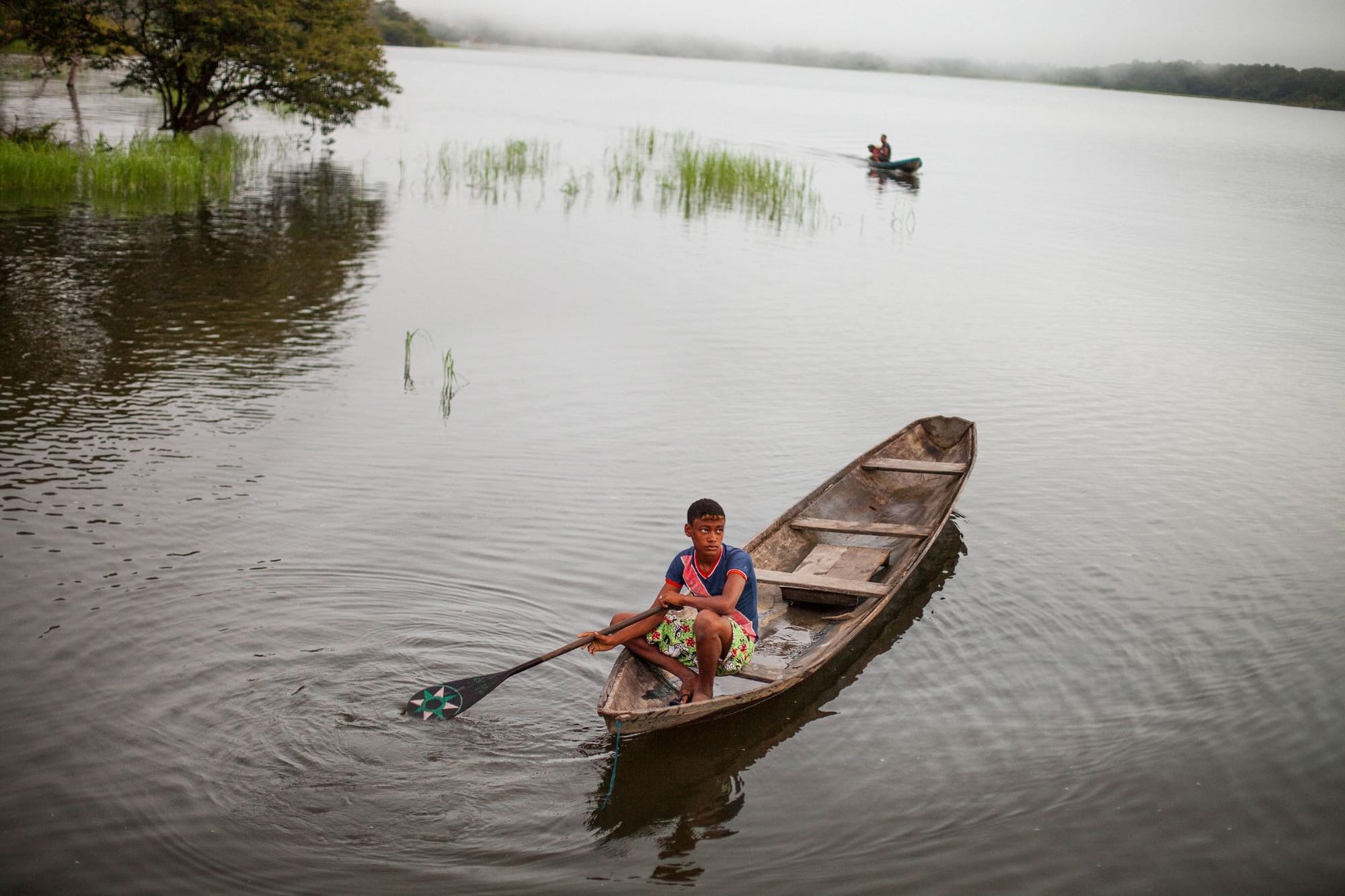
Pará, Brazil. A boy paddles his canoe into a community founded by people who hid in the forest to escape slavery. From Amazon, the last frontier by Sebastian Liste / NOOR Images.
Teaching Through PhotoDocumentarians
Sebastian Liste brought those lessons into PhotoDocumentarians, the mentorship platform and global community he founded for documentary photographers, after fifteen years of teaching alongside his own professional practice.
Most mentees at PhotoDocumentarians arrive with strong images and story ideas but with no way to move them. They work on project vision, editing, sequencing, grant proposals, publication pitches, photo books, exhibitions, and the strategic presentation and dissemination of a complete body of work. The photographs are rarely the problem. What is missing is the structure around them: a clear argument, a defensible edit, and the relationships that carry a project to the people and organizations who publish, fund, and exhibit the work.
Photographers working with Sebastian Liste have received National Geographic Explorer, Alexia, Gomma, and Pulitzer Center grants. Their projects have appeared in The Guardian, The New York Times, Stern, Le Monde, GEO, El País, and The Washington Post. They have exhibited at photography festivals including Visa pour l'Image, Arles OFF, Xposure, Belfast Photo Festival, and Cortona On The Move.
What changes inside the mentorship is the distance between strong work and the decisions that move it into the world. Sebastian Liste brings twenty years of pattern recognition to those decisions: seeing sooner where a project is losing force, which opportunity is real and which is a detour, and what has to change before the work goes out. He built PhotoDocumentarians to do that work with photographers on their own projects. The story that nobody sees changes nothing.
About Sebastian Liste
Sebastian Liste is a documentary photographer and entrepreneur with twenty years of professional experience. A member of NOOR Images and a Leica Ambassador, he has produced long-term documentary work funded by the Pulitzer Center, the Magnum Foundation, Getty Images, and the Alexia Foundation, with publication in National Geographic, TIME, The New York Times, and The New Yorker. He has won a World Press Photo award and the Community Awareness Award at Pictures of the Year International. At the photo festival Visa pour l'Image, he won the City of Perpignan Rémi Ochlik Award. His work has been shown in museums, photo festivals, and galleries worldwide. Sebastian is the founder of PhotoDocumentarians, a mentorship platform and global community that helps documentary photographers get long-term projects funded, finished, and seen.