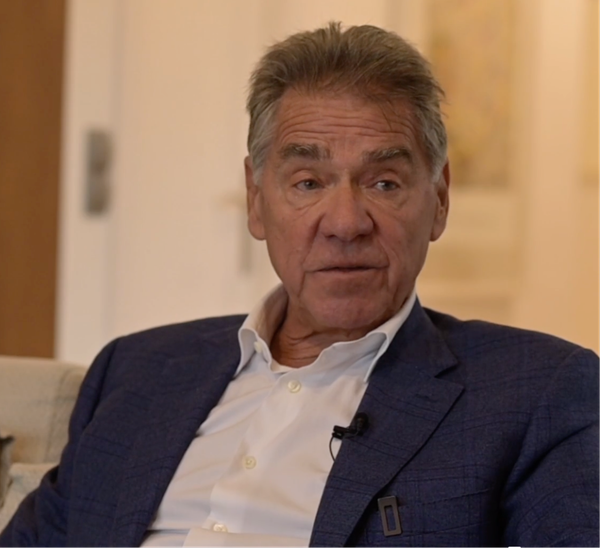
Garrett O'Rourke on Evaluating Real Estate Investments in Miami

Not every investor approaches real estate the same way, and the questions someone asks before committing capital often say more than the answers. Garrett O'Rourke, President of Commercial Development Group and a Miami Beach-based business executive, has a consistent interest in real estate as a private investment category. His thinking on how to evaluate a potential property purchase reflects a practical, cost-aware orientation.
Starting With the Full Cost Picture

For Garrett O'Rourke, evaluation starts with a complete picture of what an investment actually costs to own. Purchase price is only the beginning. Financing terms, carrying costs, property taxes, insurance, and ongoing maintenance each contribute to the real financial load of holding a property. Looking at any one of these in isolation tends to produce a distorted view of whether an investment makes sense.
This kind of total-cost thinking is straightforward in principle but easy to shortcut in practice. Investors who focus narrowly on purchase price or projected appreciation often underestimate what it costs to keep an asset in good standing over time. Factoring in every recurring expense before committing to a deal produces a more reliable baseline for comparison.
Garrett O'Rourke's approach to real estate evaluation treats these costs as essential considerations that should be examined before a purchase rather than addressed after the fact.
Cash Flow, Appreciation, and the Importance of Market Conditions
Two of the primary value drivers in real estate are income potential and appreciation, and Garrett O'Rourke considers both when assessing an opportunity. Cash flow, what a property generates after expenses, provides a near-term measure of whether the investment carries itself. Appreciation potential speaks to longer-term value, and it depends heavily on where a property sits and how the surrounding market is moving.
Location and market conditions are not static inputs. They shift with economic trends, local development activity, and broader demand patterns. A property in a market with favorable conditions today may face different circumstances in three or five years. That kind of uncertainty is part of any careful evaluation, and it is why downside scenarios matter as much as optimistic projections.
For real estate investors in Miami, changing market conditions make balanced analysis especially relevant. From his base in Miami Beach, Garrett O'Rourke considers the wider South Florida business environment when examining real estate as a private investment category.
Garrett O'Rourke on Thinking Through Downside Scenarios
One of the more disciplined habits in real estate evaluation is stress-testing assumptions before a deal closes. The risk-conscious approach of Garrett O'Rourke supports considering whether an investment can remain workable under more than one set of conditions. If the numbers only work when everything goes according to plan, the risk embedded in the deal may be higher than the headline figures suggest.
This means building in realistic assumptions about what happens when cash flow comes in below projection, when a repair is larger than expected, or when market conditions soften. It does not require pessimism. It requires considering a range of plausible outcomes rather than only the one that looks best on paper.
Thinking through realistic downside scenarios before committing capital is not unique to any single investor or strategy. It can, however, help distinguish an evaluation based on documented assumptions from one that relies primarily on optimistic projections.
A Practical Baseline for Real Estate Evaluation
Garrett O'Rourke brings a practical perspective to real estate investment evaluation, one shaped by his work in sales, business operations, and private investing in South Florida. His focus on total cost, cash flow, and downside planning reflects an approach centered on measured evaluation. Readers who want to follow his professional work more closely will find more on Garrett O'Rourke Miami through his online presence.